The Woman Who Never Surrendered
Born in 1931 in Tetu, Nyeri County, she would rise to become the only woman to attain the rank of Field Marshal in the Mau Mau (Kenya Land and Freedom Army) and one of the longest-serving commanders of Kenya’s liberation struggle.
Her life stands as quiet but undeniable proof that women were not merely supporters of the anticolonial movement, they were fighters, tacticians and leaders.
From Intelligence to the Frontlines
When the Mau Mau Uprising began in 1952, Muthoni wa Kirima was in her early twenties. Like many women in the resistance, her entry point was intelligence work. She served as a spy and courier, gathering information, ferrying supplies and moving messages between villages and forest units under constant threat of arrest or execution.
This work requires nerve, discretion and absolute loyalty. It was here that Muthoni proved her discipline and sharp strategic instinct.
Eventually, she made the irreversible decision: she entered the forest as a combatant, a path few women were allowed and even fewer survived.
Rising Through the Ranks
In the forests of the Aberdare and Mount Kenya, rank was earned through courage and competence. Muthoni distinguished herself quickly, not only in battle but in command. She understood terrain, timing and guerrilla coordination, and she earned the respect of fighters who followed her.
Her rise was swift and historic:
- Promoted to General
- Then elevated to Field Marshal, the highest rank in the Mau Mau command structure
She fought alongside legendary figures such as Dedan Kimathi Wachiuri and Field Marshal Musa Mwariama, commanding units involved in some of the fiercest engagements of the forest war.
Crucially, she was never captured.
War, Injury and Irreversible Loss
Life in the forest was brutal. Hunger, disease, constant pursuit and aerial bombardment were daily realities. Muthoni was injured multiple times in combat. One injury was so severe that it caused a miscarriage and left her unable to conceive again.
“Kenya is my only child.”
It was not a metaphor. It was the truth of what the war had taken and what she had given.
Holding the Forest Until Independence
Although the Mau Mau Uprising is often said to have “ended” in 1960, this was largely a political declaration. Many fighters did not trust colonial promises of reform.
The units under Muthoni wa Kirima’s command remained in the forest until independence in 1963.
This made her the second longest-serving high-ranking Mau Mau commander, after Field Marshal Musa Mwariama. For her, freedom was not a document, it was a condition that had to be seen, felt and secured.
Life After the War
Like many Mau Mau veterans, Muthoni returned to a nation that struggled to fully recognize those who had fought for it. She lived quietly in Nyeri for many years, though her presence remained symbolic, a living reminder of unfinished recognition and unacknowledged sacrifice.
In April 2022, she made headlines when she cut off her iconic dreadlocks, which she had worn since the 1950s as a symbol of resistance. She explained that independence had finally been achieved and the act marked closure — not forgetting but completion.
Death and Legacy
Field Marshal Muthoni wa Kirima died on 4 September 2023, aged 92. Her death was announced by Deputy President Rigathi Gachagua, who described her as a gallant freedom fighter who had stood shoulder to shoulder with Dedan Kimathi.
She left behind no biological children, no political office, no personal wealth but she left something far greater:
- Proof that women were commanders not footnotes
- Evidence that courage is not gendered
- A challenge to histories that erase women’s leadership in war
Remembering Field Marshal Muthoni
Muthoni wa Kirima’s story is not only about military rank. It is about breaking gender barriers, enduring unimaginable hardship and holding the line when surrender was easier.
She was not symbolic.
She was not ceremonial.
She was a soldier, a tactician, and a commander.
She fought, she bled, she lost and she endured, holding the forest until the flag finally changed.
It is to tell the truth about how Kenya was won.
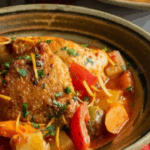 Chicken stew (kuku wa kupaka)
En swahili-klassiker infundert med røykfylt, syrlig og kremet dybde
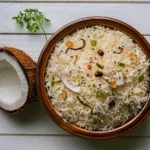 Wali wa nazi (coconut rice) — pure Swahili coastal comfort
Wali wa Nazi, Kenyas klassiske kokosris, er en duftende swahili-grunnpilar fra kysten, hvor ris møter rikdommen av nypresset kokosmelk. Enkelt, men aromatisk, serveres det med gryteretter,…